
It is said that the Temple of Apollo at Delphi, Greece, built around 650 BC, bore an inscription that translates into English as “Know thyself.” However, the human quest for self-knowledge predates this Delphic maxim, appearing in various forms of wisdom literature and philosophical thought from much earlier periods across cultures such as Mesopotamia and India. Our self-perception is closely tied to our social identity. We may identify ourselves by our profession, ethnic origin, religion, or many other such attributes.
Each of these identities divides society into “us” and “them.” For example, if I am a teacher, I consider myself part of the teaching community and see other teachers as one of us, while viewing people in other professions as one of them. This often leads to an instinctive tendency to compare ourselves with the other group and feel either complacent or envious.
The “us” and “them” divide will never go away. We will always view ourselves as belonging to a certain social group in times and situations, and consider others as outsiders. We will assess the out-group, which will shape our feelings and attitudes toward them. Sometimes, the divide can even be productive when we compete with “them” and strive to excel.
Political leaders often exploit this psychology to launch populist movements, dividing people along identity lines or contentious issues. In such movements, “them” is always vilified or dehumanized and depicted as a threat to “us.”
An example of this divisive rhetoric comes from U.S. President Donald Trump, who portrays undocumented immigrants as a threat to Americans. His administration is currently rounding up, jailing, or deporting them. They are guilty of entering the United States in search of a better life without permission from immigration authorities.
History tells us that the ancestors of those Americans now singing, “This land is your land, and this land is my land; from California to the New York Island …” also entered “this land” without permission from anyone, driven by the same desire for a better life. Yet their descendants now label that same act illegal. It’s like taking shelter in a cave during a rainstorm and then blocking the entrance so no one else can come in. It’s rather selfish, but perhaps that’s just human nature.
While anti-immigration sentiment focuses on keeping newcomers out, an even more brutal manifestation of selfish human pursuit is the forcible expulsion of people who have lived for generations in a country, simply because of their ethnicity or religion.
One such case is that of the Rohingyas in Myanmar. Because of their ethnic identity, they have faced mass killings, sexual violence, arson, and forced eviction. The United Nations has described the atrocities against them as a “textbook example of ethnic cleansing.” Around a million Rohingyas have eventually taken refuge in Bangladesh, creating a major humanitarian crisis.
Similarly, tens of thousands of Tigrayans from Ethiopia have been forcibly expelled from their homes because of their ethnic identity. Many of them are now living in dire conditions in refugee camps in Sudan.
Another example is Darfur, Sudan, where people from African ethnic groups, such as Masalit, Fur, and Zaghawa, were massacred by Arab militia. Over half a million survivors fled to Chad, leaving behind their homes, lands, and belongings.
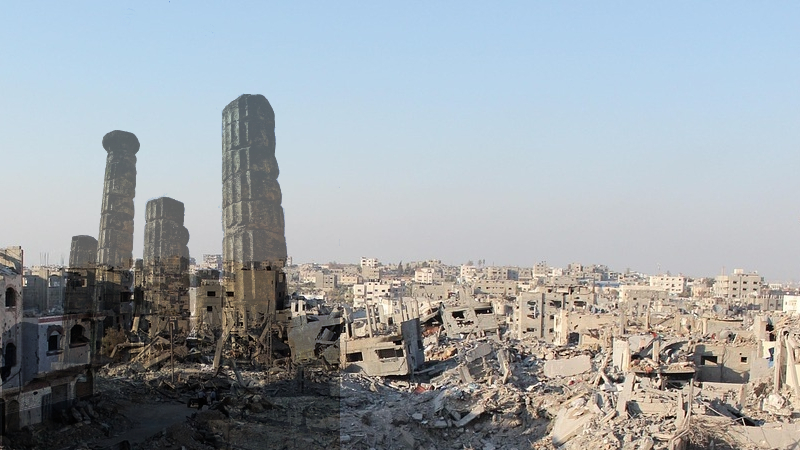
The ongoing Israeli military offensives in Gaza have so far killed over 50,000 Palestinians, mostly women and children. In the West Bank, Israeli settlers are evicting Palestinians from their homes and occupying them.
These examples have one thing in common: they are driven by intense hatred toward the victims and the greed of occupying their land and properties. To what level the hatred can reach may be grasped from the comments of an Israeli politician, Moshe Feiglin, former Deputy Speaker of the Israeli Knesset. During a live TV interview he said, “Every child, every baby in Gaza is an enemy … We need to conquer Gaza and colonize it and not leave a single Gazan child there …” Indeed, the Israeli military, deploying its most sophisticated weapons—tanks, missiles, and aerial bombings—has already killed over 17,000 Palestinian children, and the killing continues unabated.
Human civilization has come a long way — from autocratic rule, slavery, and systemic oppression based on ethnicity, race, and gender, to the ideals of universal suffrage, equality, and human rights. We are now supposed to be more civilized than ever. Today, we have a United Nations, an International Court of Justice, and an International Criminal Court. Yet political leaders like Moshe Feiglin openly advocate the killing of innocent children, and the world looks on. Proposals in the UN to stop Israeli atrocities are routinely vetoed. Such contradictions, hypocrisy, and double standards expose the troubling gap between the ideals of civilization and the realities of global power politics. How can a world that tolerates ethnic cleansing, protects oppressors, and betrays the vulnerable be called civilized?
This article was published in the Daily Sun on June 12, 2025. Here is the link: https://www.daily-sun.com/printversion/details/808845