
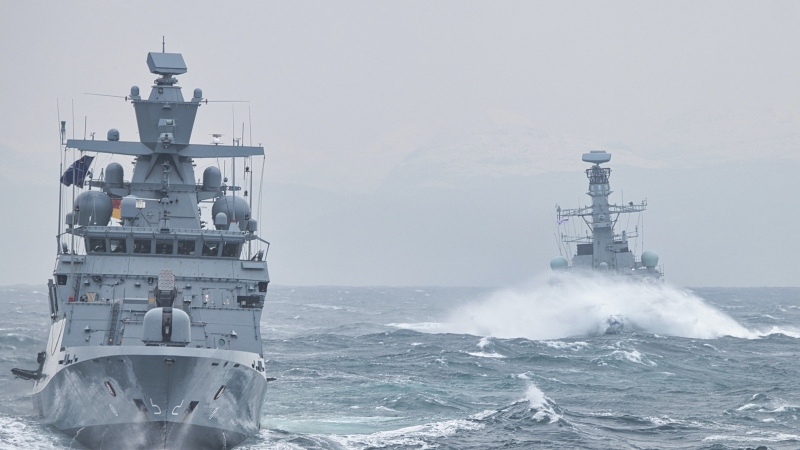
Taiwan’s President Tsai Ing-wen returned home on April 7, 2023, after a 10-day trip abroad including stops in New York and California. The following day, China started a 3-day military drill around Taiwan practicing air and sea blockade and simulated strikes on important targets in Taiwan under actual combat conditions using live ammunition. As reported by the China Daily newspaper, a significant component of the drill entailed electronic suppression operations targeting radar and anti-missile bases on the island of Taiwan. The patrols and maneuvers in the waters and airspace surrounding the island showcased China’s capability to effectively neutralize Taiwan’s defenses and enforce a blockade or isolation if the need arises. All these were China’s reaction to President Tsai’s meeting in California with Kevin McCarthy, Speaker of the US House of Representatives. China had warned repeatedly against Tsai’s meeting with McCarthy.
In August 2022, the then Speaker of the US House of Representatives Nancy Pelosi visited Taiwan when China made a similar response initiating a sequence of military exercises that encircled the island of Taiwan and fired missiles over its territory.
Why is China so sensitive or rather obsessive about the exchange of high-level visits and meetings between the US and Taiwan?
To find the answer to this question we would have to delve a little into the history of Taiwan. Taiwan is historically a part of China – “the land of the Chinese people, the descendants of the Yan and Yellow Emperors” as Ma Ying-jeou, the President of Taiwan from 2008 to 2016, puts it.
In 1895, China had to give away Taiwan to Japan after losing a war. It got it back in 1945 after Japan’s capitulation in World War II. At that time China was known as the Republic of China (ROC) and it was governed by the Nationalist Party or Kuomintang under the leadership of Chiang Kai-shek. In 1949, the Communist Party, led by Mao Zedong, gained control of mainland China after defeating Chiang Kai-Shek in a civil war. Chiang Kai-Shek fled to Taiwan with his forces and followers. Mao Zedong established the People’s Republic of China (PRC) on the mainland with the capital Beijing while Chiang Kai-Shek declared Taipei city of Taiwan as the relocated capital of the ROC.
Former US Secretary of State Henry Kissinger wrote in his book “On China” published in 2011 that Beijing and Taipei have competing views on Taiwan’s national identity. The Nationalist view sees Taiwan as the home of the ROC’s government-in-exile, while Beijing sees it as a renegade province. Both sides want to “liberate” the other. They equally reject the idea of recognizing the mainland and Taiwan as separate states, known as the two-China solution.
[… … …]
This article was published in the Daily Sun on April 25, 2023. Please read the full article here or here.